
The best CPQ software for services teams: 6 tools compared
Compare the best CPQ software for services teams. An honest look at six quoting tools, including services-native, deal desk, document, and channel solutions.

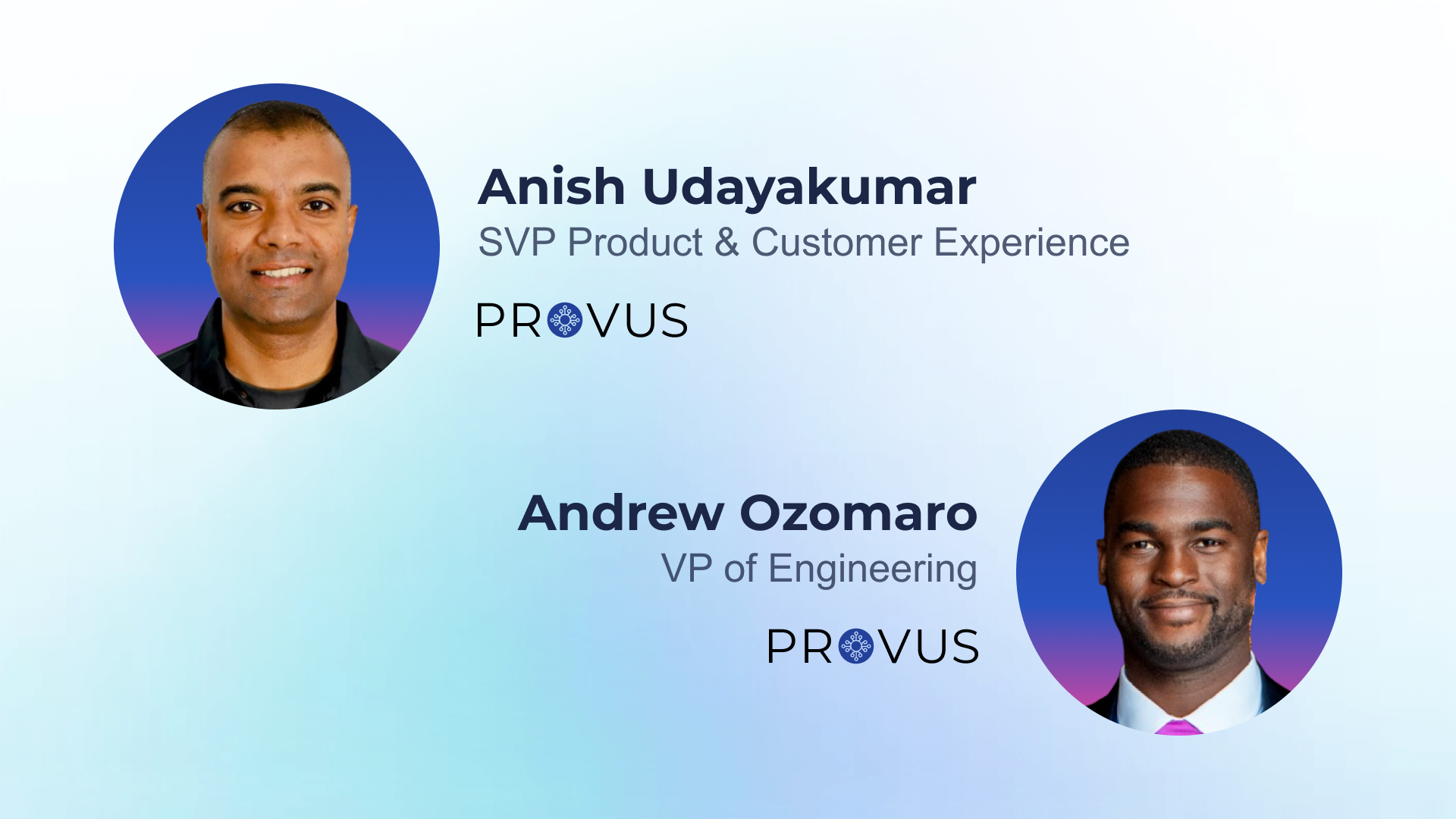
By Anish Udayakumar & Andrew Ozomaro
Most services teams using AI right now are pointing a general tool at a purpose-built problem. They open Claude or ChatGPT, ask what discount to apply, and get a confident answer with no idea what account it’s for, what the margin looks like, or whether anything like it has ever been quoted before.
That gap was the starting point for our latest Provus AI session. Anish Udayakumar, SVP of Product & Customer Experience, and Andrew Ozomaro, VP of Engineering and Chief Architect, sat down for a live walkthrough of what’s new in Provus AI: the deal-ready agents now running inside the platform, shown on real quoting workflows.
Recap the agents they demoed, what each one does, and why being connected to $5B in services pricing intelligence changes what AI can do for a seller.
Key takeaways:
The most common reason services teams stall on AI is they think they have to earn it first: clean up the data, standardize quotes, run everything for six months, and then AI will have something to work with. Anish spent the opening minutes dismantling that.
“You can start now. AI does not need to begin with a massive transformation program. You can pick one quoting use case where the pain is obvious and get measurable value back immediately.” — Anish Udayakumar
He set three ground rules for how Provus AI thinks about services. First, you can start today. Second, AI works inside the quoting process — it isn’t a separate chatbot or a side experiment, but is embedded where sales, pricing, and delivery teams already make decisions. Third, it augments your experts rather than replacing them.
“AI does not replace your sales, solutioning, delivery, or pricing teams. It gives them more intelligence, more context, and more confidence at the time of decision-making.” — Anish Udayakumar
Every agent keeps a human in the loop. Sellers stay accountable, and the agent does the work that used to take away hours.
The first agent up was Drewvus, Provus’ Email Agent. Andrew started with something every seller recognizes: a prospect email that ends in “can you get me a quote for this?”
Instead of taking that email back and looping in the solutioning team, Andrew forwarded it straight to Drewvus with a simple instruction. A couple of minutes later, a fully structured, priced quote existed in Provus, built from the content of the email alone.
“Drewvus has an understanding built up around this account. It knows the customer’s history, the prior quotes, the industry — so the quote it produces is grounded in the relationship.” — Anish Udayakumar
And the input doesn’t have to be email. An RFP document, a filled-out survey, or a Zoom recording of a discovery call all work the same way. Andrew’s framing made the math obvious:
“I can take 10 prospect emails, forward them all to Drewvus, and have 10 quotes within two to three minutes.” — Andrew Ozomaro
The second half of the Drewvus demo was about automating the manual, click-heavy work of quoting by simply asking for it.
Andrew opened Drewvus alongside an open quote and worked through the tasks that normally cost a seller an afternoon. Create plan, design, and implementation sections. Move the right resources into each. Apply a discount, add a default set of milestones, or pull the same milestone split from a quote built months ago. Each one was a simple sentence. While typing, Andrew noted “you can be a bad speller” and the agent understands your intent.
Then Andrew asked for a margin breakdown across sections, and Drewvus explained them, flagging that the implementation section carried significantly higher margin and pointing to the QA and engineering-manager resources driving it. He could benchmark the quote against every other quote in the company to see whether the margin would clear approval.
Anish tied it back to what CPQ actually means: configure, price, and quote. Drewvus handles all three, “because it’s purpose-built for services quoting.”
The session’s most strategic moment came with the Value Pricing agent, built around a shift Anish has watched reshape services deals. The old motion sold effort, but customers have stopped buying it.
“Customers don’t care how many engineers you have or how many QA people you’re going to staff. Now it’s about: How is this proposition going to help me achieve my goals?” — Anish Udayakumar
Pricing on value instead of effort is harder, because it requires evidence. The Value Pricing agent reads current and past quotes, pulls downstream PSA delivery data on how long this kind of project takes, and runs web research on the customer. Then it surfaces value drivers, each with a dollar figure attached and the reasoning behind it. From there it produces a set of distinct deal structures, a persona-based sales playbook, including the cost of walking away, and negotiation prep.
This is where the difference from a general tool surfaced on its own:
“This is not just a plain LLM like ChatGPT or Claude. I didn’t ask it to give me a bunch of tables. Provus AI is structured data, structured information, and structured output, and the seller can push back at any level.” — Andrew Ozomaro
If you reject a piece of evidence, the agent recalibrates or rebuilds the scenario without it. It also remembers when a deal closes and carries what worked into the next one.
“With Provus AI, you’re constantly getting improvements based on success and failure, not just the success. No disconnected LLM has a way to build this kind of feedback loop.” — Andrew Ozomaro
The last agent demoed, Quote Optimizer, solves the request every seller fields late in a deal: “I like this, but can you get it to $300K? Or what would it look like at nine months instead of six?”
Andrew ran it against a stuck deal, and the agent worked out why, flagging outliers a seasoned rep might eventually catch and a junior rep would miss. Then it moved to its scenario lab. In a few minutes it produced three distinct ways to restructure the deal within the boundaries already set, each with a recommended option, the reasoning to take to the customer, and the exact changes to the quote.
What connects all four agents is that none of them lives in a separate window. They run inside the quoting process, on the seller’s own data, with the seller in control. And they get sharper with every deal because they remember.
For a services team under pressure to adopt AI, the takeaway from the session is that the wait is the risk. The agents are deal-ready now, the entry point can be a single forwarded email, and the value shows up on the first quote. Not after a six-month data project.
Still pointing a general-purpose chatbot at a services quoting problem? Book a demo to see how Provus AI gives your team deal-ready agents built for services — quoting, pricing, and optimizing on your own data from day one.


Services Quoting for Professional Services

Services Quoting for Consulting Services

Services Quoting for Asset-Based Services
Compare the best CPQ software for services teams. An honest look at six quoting tools, including services-native, deal desk, document, and channel solutions.
WWT’s Global PMO on how to build a feedback loop between sales and delivery, and where AI fits. Watch the replay.
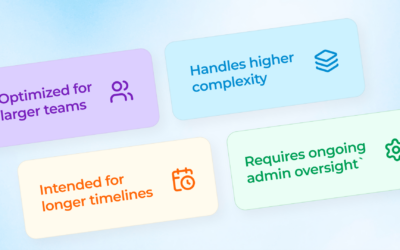
Mid-market services teams fail with enterprise CPQ for one reason: the platform assumes quoting logic, deal structure, and operating model that don’t exist at their scale.