
The best CPQ software for services teams: 6 tools compared
Compare the best CPQ software for services teams. An honest look at six quoting tools, including services-native, deal desk, document, and channel solutions.

Price variability in services is rarely about salespeople who can’t negotiate. It’s about organizations that have never clearly defined what good pricing looks like and then handed it down to every person building a proposal in a spreadsheet.
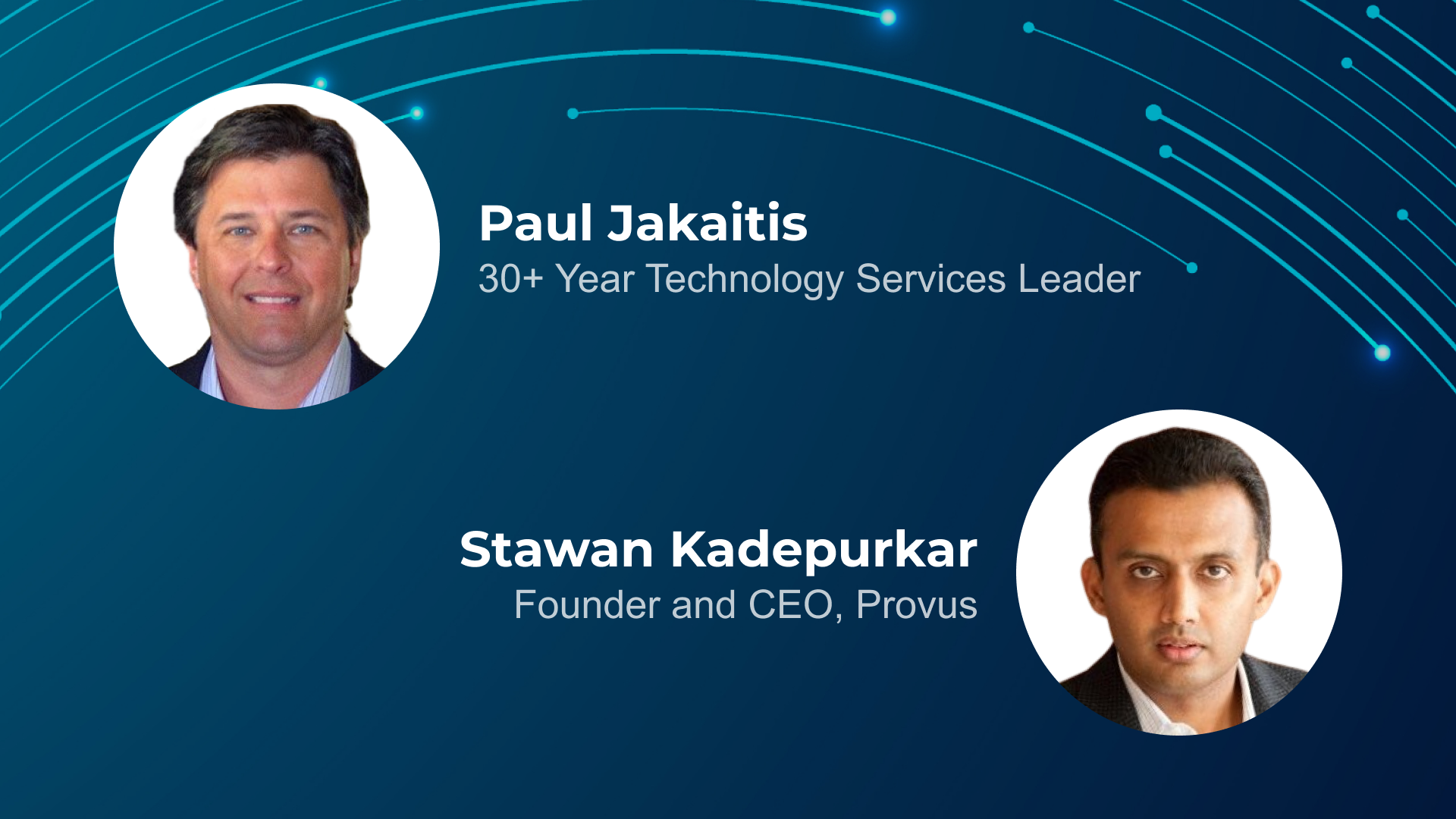
Paul Jakaitis has spent 30+ years making that argument across technology professional services, from a startup he helped grow to over a thousand people, through turnarounds, to Accenture and a Big 4.
When Provus Co-Founder and CEO Stawan Kadepurkar sat down with him for a webinar on reducing price variability, the conversation cut straight to the root causes most firms keep dancing around.
Key takeaways:
Most firms front-end the strategic pricing thinking and then operationally do it the old way. “They still do it in some kind of spreadsheet somewhere,” Paul said. “It turns out to be a cost-plus model.”
That disconnect — between how a firm positions its value and how it actually prices a deal — is where margin starts to leak. Sellers under pressure quote to win, delivery inherits the scope, and finance closes the books while everyone wonders why the numbers don’t match.
“There is no North Star for what good pricing looks like,” Paul said. “There’s tribal knowledge. So one practice within a large professional services firm might overvalue or undervalue what they deliver.”
Paul’s framework involves alignment between how a service is sold in a proposal, how it’s structured in billing and delivery, and how it flows into financials. Almost no team has all three.
“When you look at the margins, what did we actually sell to that client? Short of digging up a proposal off some shared drive somewhere and emailing people for the estimation worksheet — you really don’t know,” he said. “It’s not captured in a system.”
The gap widens at each handoff. A proposal is scoped with a particular resource mix, and by the time delivery starts, that mix has changed. The billing codes don’t match what was sold, and eventually it all needs to land in financials in a way someone can analyze. The result is margin numbers at quarter-end that financial teams can’t fully trust.
The three-way match fixes this with a service taxonomy that stays consistent from proposal through delivery through financial reporting — the foundation on which any reliable margin analysis can be built.
This is also where CPQ belongs in the stack. “CRM doesn’t do any of that,” Paul said. “CRM creates an opportunity, puts a dollar value on it, some high-level data — but those systems are not meant to build up your price and define what you’re actually going to provide to the client. That middle part is done offline, on spreadsheets, and it’s all very siloed.”
Services CPQ moves that middle part online and makes the data consistent. That’s the bridge CRM can’t build.
Most execs want decimal-point precision from AI systems that don’t yet have the data to support it. Paul’s suggestion: position AI in pricing as guidance, not gospel.
“Things coming out of AI in terms of pricing optimization is guidance. It puts you in a range. Here’s what ‘good’ looks like. Here’s the historical top quadrant, middle, low. It tells you where we believe the win-loss ratio is going to sit.”
The value is real for sellers who default to discounting out of uncertainty. “An AI tool can give them the ammunition to say, here are the items driving how we’re going to deliver this type of value. We’ve done it before. Here are five case studies.”
But CPQ is what makes AI viable. It’s the data capture layer that gives an AI pricing engine something to learn from. Feed unnormalized spreadsheets into AI and “you’re going to spend an awful lot of time trying to do mappings,” Paul said. “And then you’ll find some frustration there.”
The agentic AI tools built on that foundation can only perform as well as the data underneath them.
Many firms set revenue growth targets and then try to hit them with the same sales model. Paul was direct about why that fails.
“They think they’re going to use the old model, the old people, maybe hire a couple new ones. But they haven’t really revisited what it’s going to take to get to the next tier.”
His phrase for what gets missed: “right to win” — a clear-eyed answer to whether you have the positioning, services, and pricing to confidently compete for the deals you’re chasing.
“Most successful pricers are good because they’re confident,” Paul said. “Most people need the support around them to be that confident.”
That support comes from structure: defined services, taxonomy, pricing ranges, and a sales model aligned to outcomes. Without it, growth targets slide because deals get won at the wrong margins. Or lost to a competitor who knew exactly what they were worth.
Paul’s recommended sequence for leaders who aren’t sure where to begin:
And when governance changes create friction (which they will), reframe it rather than ease the requirements. “Tell me an aerospace or engineering firm that works off individualized spreadsheets,” Paul said. “What pharmaceutical company is doing trials without tracking everything? The world has moved to that level of maturity.”
Pricing transformations done this way — data first, taxonomy second, CPQ in the middle, AI on top — typically improve margin by 2% to 7%. For any firm at meaningful scale, that’s the difference between hitting your year-end number and explaining to the CFO what happened.
Pricing variability doesn’t fix itself. The firms that close the gap between what sales sells and what finance sees are the ones that do the unglamorous work first — the taxonomy, the data governance, the three-way match — and then let AI amplify what’s already working.
If your quoting process still lives in spreadsheets and email threads, that’s not a neutral choice. It’s an active constraint on the margin visibility your business needs to grow.
Book a demo to see how Provus gives services teams the pricing infrastructure and AI quoting they need to quote smarter, protect margin, and deliver with confidence.


Services Quoting for Professional Services

Services Quoting for Consulting Services

Services Quoting for Asset-Based Services
Compare the best CPQ software for services teams. An honest look at six quoting tools, including services-native, deal desk, document, and channel solutions.

See what’s new in Provus AI, including agents that turn emails into quotes, price on value, and optimize live deals. Watch the replay for the full demo.

WWT’s Global PMO on how to build a feedback loop between sales and delivery, and where AI fits. Watch the replay.