
Before AI can fix your services pricing, you have to fix your data
30-year services veteran Paul Jakaitis explains the data, taxonomy, and governance work that makes CPQ and AI worth the investment.

Despite their best efforts, many service organizations are grappling with hidden risks that erode profitability and impede growth. These risks often arise from operational inefficiencies, misaligned expectations, and disconnected service quoting processes.
If these risks remain unaddressed, the financial impact can be severe:
To mitigate these risks, businesses must adopt a Connected Services Outcomes (CSO) strategy. This approach integrates service quoting with business objectives, leveraging real-time, data-driven insights to prevent scope creep, optimize pricing strategies, and streamline operations.
In the next installment, we’ll explore why traditional quoting methods are failing businesses today and how a connected services strategy can drive profitability.
Get instant insights with your Connected Services Outcomes Assessment Score—highlighting opportunities to enhance pricing effectiveness, revenue optimization, and financial predictability. Start Now!


Services Quoting for Professional Services

Services Quoting for Consulting Services

Services Quoting for Asset-Based Services
30-year services veteran Paul Jakaitis explains the data, taxonomy, and governance work that makes CPQ and AI worth the investment.

AI is restructuring how services companies operate, price, and grow. Provus CEO Stawan Kadepurkar breaks down the three fronts reshaping the services industry.
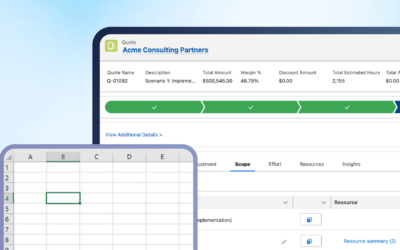
Services companies outgrow spreadsheet quoting when margins consistently leak, when sales and delivery are always out of sync, and when pricing lives in one person’s head.